How Long Does Paint Protection Film Last in California Sun?
Professionally installed paint protection film lasts well beyond five years on the California coast, and quality film cared for properly will hold its clarity considerably longer than that. The variables that decide where your film lands in that range are the film itself, the quality of the installation, and how you maintain it. At Elite Auto Spa in Marina, CA, we install Ceramic Pro Kavaca film backed by manufacturer warranty coverage, and we tell customers plainly what it takes to get the full life out of it.
The common assumption is that once film is on the car, the job is done. It is not. Sunlight and heat work on any polymer over time. What follows is what actually degrades film, what conditions on the Monterey Peninsula do specifically, and what separates film that still looks clear in year eight from film that yellows in year three.
What Sunlight Actually Does to Paint Protection Film
Paint protection film is a thermoplastic polyurethane layer with a clear top coat. Ultraviolet radiation slowly breaks down polymer chains at the surface, and the film yellows, loses clarity, and turns brittle. Brittleness is the real problem, because film that has lost its flexibility cracks under impact instead of absorbing it. At that point it has stopped doing the job you bought it for.
Heat compounds this. Direct sun raises panel surface temperature well above air temperature, and repeated heating and cooling stresses the adhesive bond. Lifting edges and small bubbles are usually the first visible sign, and they almost always start at panel edges rather than mid hood.
Quality film is engineered against both. UV inhibitors slow the polymer breakdown, and self healing top coats let minor swirls close up with heat. Budget film often lacks meaningful UV stabilizers, which is why cheap installs yellow so early.
The Monterey Peninsula Is Its Own Case
A lot of PPF advice written for California assumes desert conditions. That does not describe Marina, Seaside, Monterey, or Salinas. What we actually deal with here is different, and it matters:
- Steady UV exposure rather than extreme heat. The marine layer burns off into strong midday sun, and UV passes through haze, so film accumulates exposure on days that never feel hot.
- Salt air. Airborne salt is the defining local factor. It settles on the film, works into edges, and combined with moisture it attacks the paint at any exposed edge or seam.
- Persistent moisture. Coastal humidity and morning fog keep surfaces damp longer, giving contaminants more time to bond.
- Mild temperature swings. We get far less thermal cycling than inland valleys, which is good news for adhesive life here.
The practical takeaway is that edge care matters more on this coast than heat management does. Salt sitting in a film edge for weeks will do more damage to a car in Marina than an afternoon in the sun will.
What Determines How Long Your Film Lasts
Film Quality
This is the largest single variable. Premium films use higher grade polyurethane with UV inhibitors built into the formulation and a self healing top coat. They also carry manufacturer warranty coverage, which tells you what the manufacturer is actually willing to stand behind. We install Ceramic Pro Kavaca film for this reason.
Installation Quality
Film is only as durable as its edges. Surface preparation, decontamination, and precise cutting determine whether the film sits flush or leaves a lip for dirt and salt to work into. Wrapped edges and properly relieved curves around mirrors and bumpers prevent lifting two years down the line. Our team measures, cuts, and hand applies film to each vehicle rather than working from a generic pattern.
Maintenance
Neglected film fails early. Contaminants left on the surface embed and abrade. Salt left in edges lifts them. This is the one variable entirely under your control, and it is the one most owners underestimate.
Driving and Parking Habits
Highway miles behind gravel trucks and street parking under trees shorten film life. Garage or covered parking meaningfully reduces cumulative UV exposure, and it is the easiest change most owners can make.
How PPF Compares to Ceramic Coating and Wax
These get discussed as alternatives, but they solve different problems:
- Wax adds gloss and a thin, temporary barrier. It washes off. It offers no impact protection and very little UV defense. Useful for appearance, not for protection.
- Ceramic coating bonds to the paint and creates a hydrophobic surface that repels water and contaminants and makes washing far easier. It does not stop a rock chip.
- Paint protection film is a physical barrier with real thickness. It absorbs rock chips, road debris, and scratches, and self heals light marks. It is the only one of the three that prevents impact damage.
For most drivers here the strongest approach is both: film on the high impact front facing surfaces, ceramic coating over the rest of the vehicle and over the film itself. The coating adds gloss and eases maintenance while the film handles physical damage. Our Presidential Package combines these services in one appointment.
Our Paint Protection Film Packages
We offer four coverage levels, all installed with self healing film:
- Front Bumper, starting at $1,000. The single highest impact surface on the vehicle.
- Full Front End, starting at $2,600. Front bumper, full hood, mirrors, full front fenders, headlights, and fog lights.
- Track Pack, starting at $3,600. Adds rocker panels and impact rear fenders for drivers who cover serious highway miles.
- Full Vehicle, starting at $6,295 for coupes and sedans and $7,295 for SUVs and trucks. Complete coverage including doors, roof, trunk, and all fenders.
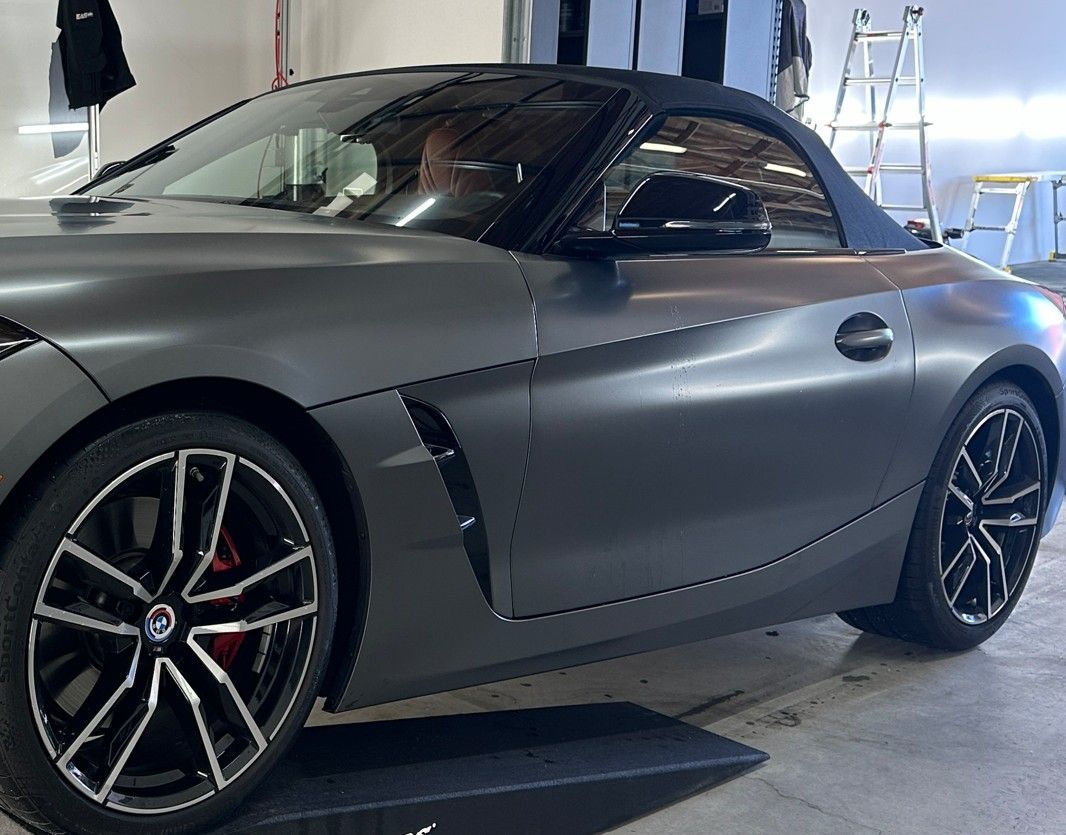
We also install ClearPlex Contour windshield protection film starting at $550. It defends glass against rock chips and pitting, stays optically clear, and is guaranteed not to peel, bubble, crack, or yellow. It can be applied to sunroofs and side or rear glass as well. Matte finish and color change film are also available.
All quoted prices are out the door with no added taxes or fees, and a 10% deposit secures your appointment date.
Maintenance That Actually Extends Film Life
None of this is complicated, but consistency is what separates film that lasts from film that does not.
- Hand wash every one to two weeks with pH neutral soap and a soft microfiber mitt.
- Pay deliberate attention to film edges, especially on this coast. Salt collects there. A soft brush and a gentle rinse along every edge takes an extra two minutes and prevents most lifting.
- Skip automatic washes with brushes. Stiff bristles and high pressure jets catch edges and are the fastest way to lift good film.
- Dry with clean microfiber rather than air drying, which leaves mineral spots that etch over time.
- Remove bird droppings, tree sap, and bug residue promptly. These are acidic and will mark a top coat if left to bake.
- Apply a ceramic coating over the film. It adds a sacrificial layer and keeps contaminants off the film itself.
- Have the film inspected periodically. Catching a lifting edge early means a small repair rather than a panel replacement.
Ready to Protect Your Paint?
Elite Auto Spa has been protecting vehicles in Marina and across the greater Monterey area since 2014. We install paint protection film, ceramic coating, LLumar window tint, and paint correction from our facility at 407 Reservation Road, Suite #2 in Marina.
If you are weighing coverage levels, we will walk you through what makes sense for how you actually drive rather than pushing you toward the largest package. Call (831) 229-3121 or request a free estimate at eliteautospacare.com. We are open Tuesday through Saturday, 9:00 AM to 5:30 PM, with Sunday and Monday by appointment.
Frequently Asked Questions
How long does paint protection film last on the California coast?
Quality film that is professionally installed and properly maintained lasts well beyond five years, often considerably longer. Film quality, installation precision, and maintenance decide where you land. Our installations include warranty coverage.
Does PPF turn yellow over time?
Older and lower grade films did, which is where the reputation comes from. Current premium films use UV inhibitors specifically to prevent it. Budget film without meaningful UV stabilization will still discolor, which is the clearest argument for paying for quality film the first time.
Can paint protection film be removed without damaging my paint?
Yes. Professionally installed film uses an adhesive that bonds securely but releases cleanly when removed correctly with heat and proper technique. This is one of the reasons owners choose film over more permanent options.
Is full vehicle coverage worth it, or is partial coverage enough?
It depends on how you drive. If most of your miles are highway commuting, the front end takes nearly all the impact and a Full Front End package covers the real risk efficiently. Full coverage makes sense for higher value vehicles or cars you plan to keep long term.
Should I get ceramic coating instead of PPF?
They are not substitutes. Ceramic coating adds gloss, water repellency, and easier cleaning. Film stops rock chips. If your concern is physical damage, only film addresses it. Many of our customers do both.
How does salt air on the Monterey coast affect my film?
Salt is the main local threat, and it works at the edges rather than the face of the film. Regular washing with attention to every film edge is the single most useful maintenance habit for a vehicle kept near the coast.
How soon after installation can I wash my car?
Give the adhesive time to fully cure before the first wash. We will give you a specific timeline along with product recommendations. Avoid pressure washing near edges for the first several weeks.
Does PPF protect against sun fading?
It helps. Film acts as a barrier between the sun and your clear coat, slowing the fading and discoloration that constant exposure causes. It is not a substitute for covered parking, but it reduces what reaches the paint underneath.